
Thermal scope comparisons
Find the right thermal scope.
Compare the view, understand the differences, and check retailer prices.
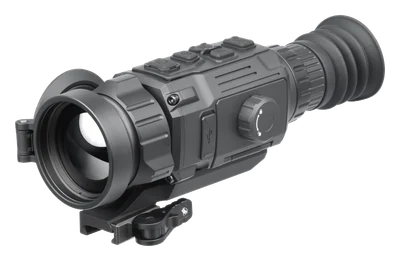
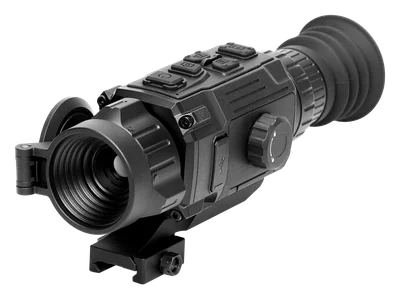
What do you want to spend?
Tap a budget. We show the scope with the top HuntGrade Score for that money, at the best price for it — the pick updates when a price or a score changes.

A 1280×1024 sensor behind a 50 mm lens — enough detail to identify a hog out to 456 yards.
Where to buy
Same scope.
$3,000 price difference.
Find the lowest price for your scope. Compare retailer offers side by side, with shipping and return terms laid out before you buy.
Compare buying options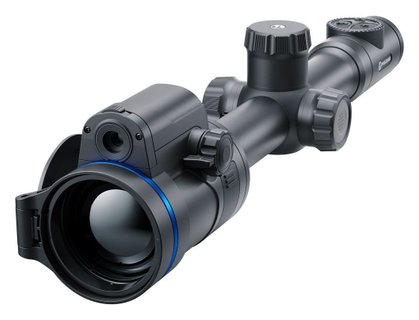
Compare offers for
Pulsar Thermion Duo DXP55
Top 3 of 8 buying choices
The chain that makes the picture.
Four parts stand between a hog in the dark and your eye — the lens gathers heat, the sensor turns it into a picture, processing cleans it up, and a small display shows you the result. The picture is never better than the weakest link, so the score walks every link of the chain.
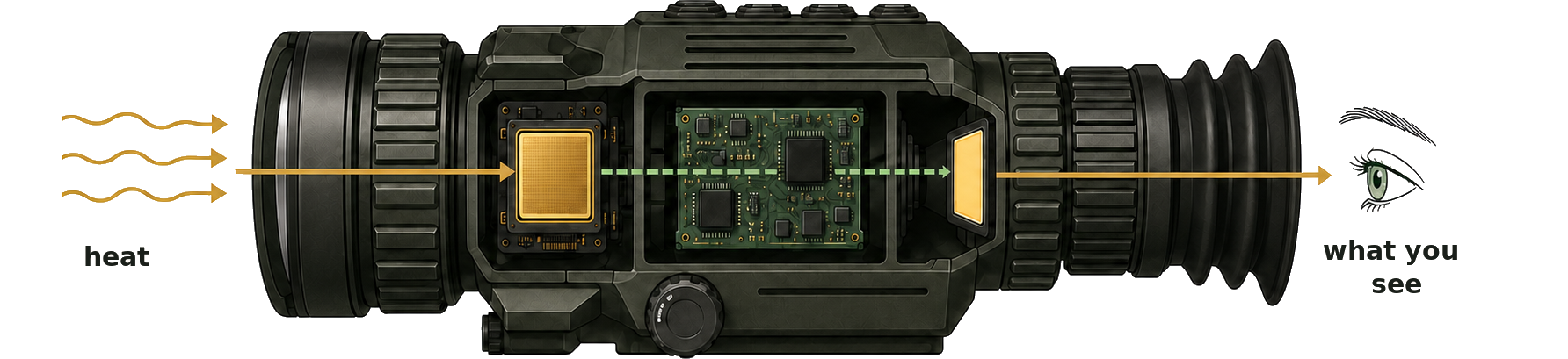
Lens
scoredgathers heat and sets your field of view
scored on: sharpness (f-number)
Sensor
scoredturns that heat into a picture
scored on: resolution + sensitivity (NETD)
Processing
not scored yetsharpens and steadies the raw signal
no published spec to score yet
Display
scoredthe screen you look through
scored on: density, size, and detail
All 155 scopes, one list — filtered down to yours.
Every scope is ranked by the same published score. Tap a sensor class for its top five — and the full page cuts the list by price, distance, and features too.
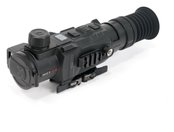
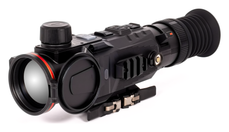
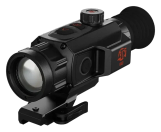

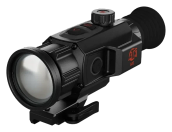
The most expensive brands don’t score the highest.
Each logo marks a brand’s middle scope — half its lineup scores better, half worse. The higher the logo, the higher its HuntGrade score; the further right, the more it costs.
See farther, or see wider — you can't have both.
A bigger lens magnifies more, but it doesn't show you more ground. These two Armasight scopes have the same 640×480 sensor and different lenses: the 25 mm shows the whole sounder, the 75 mm pulls in so close the hogs run off the edge of the frame.
The same hogs at 100 yards, rendered live from each scope's real numbers.
Every thermal scope on the US market, scored the same way.
Find the one that fits your rifle, your ground, and your budget.
Browse all 155 scores