
This scope’s family

Thermion 2
11 scopesThe main line with traditional scope styling, a broad sensor choice and ranging options.
$1,600–$4,995
This sensor and lens combination favors identifying animals farther away, trading a broad scanning view for a narrower view of distant targets. Its 39.2 oz mounted weight and 10-hour listed runtime are worth weighing together for longer nights. Compare current offers and the alternatives below to see what a change in price buys you.
Side by side
Compare price, image performance, and handling to see which tradeoffs suit your hunting. Start with these alternatives, or compare any scope in the full lineup.
| Scope | This scope 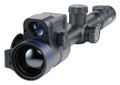 Pulsar Thermion 2 LRF XG5064050 mm3× Pulsar Thermion 2 LRF XG5064050 mm3× | Similar setup  Sig ECHO SV50-LRF64050 mm2× Sig ECHO SV50-LRF64050 mm2× | Lower price  Sig ECHO RV50-LRF64050 mm2.5× Sig ECHO RV50-LRF64050 mm2.5× |
|---|---|---|---|
| At a glance | |||
| Best price | $4,700 | $4,229 | $4,000, advantage |
| HuntGrade Score | 72.2 | 72.9, advantage | 72.7 |
| Overall rank | #54 of 155 | #45 of 155, advantage | #47 of 155 |
| Image | |||
| Image score | 71.7 | 71.7 | 71.7 |
| Resolution | 640×480 | 640×512, advantage | 640×512, advantage |
| Objective lens | 50mm | 50mm | 50mm |
| Field of view | 8.8° | 8.8° | 8.8° |
| Identification | 456 yd | 456 yd | 456 yd |
| Handling | |||
| Handling score | 65.6 | 73.8, advantage | 72.2 |
| Mounted weight | 39 oz | 31 oz, advantage | 35 oz |
| Runtime | ~10 hrs | ~11 hrs | ~12 hrs, advantage |
| Laser rangefinder | Built in | Built in | Built in |
| Warranty | |||
| Warranty score | 100.0, advantage | 90.0 | 90.0 |
| Term | 5 years | 5 years | 5 years |
| Transferable | Yes, advantage | No — first owner only | No — first owner only |
The reasoning
See how each specification contributes to the Thermion 2 LRF XG50’s Image, Handling, and Warranty scores, and how those combine into its HuntGrade Score.

640×480 sensor · 50 mm lens · 12 µm
Behind the scope
See where the Thermion 2 LRF XG50 fits in Pulsar’s lineup. Explore the product families, compare configurations and prices, and learn about the company behind the scope.
4 families · In-stock price ranges
The main line with traditional scope styling, a broad sensor choice and ranging options.
$1,600–$4,995
The lighter, compact option for carrying farther, without a built-in laser rangefinder.
$1,899–$2,000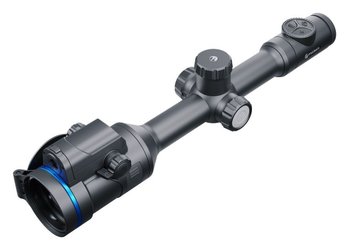
Thermal and a daytime color camera in one scope, so you can switch views as needed.
$3,000
A compact alternative to Thermion, with built-in ranging and a body that mounts to a rail.
$3,000–$3,350Pulsar says its products are developed, designed and manufactured in Europe. Our component research attributes the thermal sensors in these scope families to Lynred.
Pulsar’s U.S. support and warranty process is separate from the international terms. Registration and product generation can affect coverage.
Explore the families, compare prices with similar scopes, and learn about the company behind them.
On YouTube
Reviews and demonstrations of the Pulsar Thermion 2 LRF XG50, together in one place.
Loading a video connects to YouTube and allows its cookies for playback. YouTube privacy policy
Buying options
See how prices differ for the Thermion 2 LRF XG50, and what each seller offers for the money.
Prices verified October 2026, seller terms September 2026. HuntGrade may earn an affiliate commission. How we make money
Scroll across for policies, prices and seller links.
| Seller | Shipping | Returns | Price | Seller links |
|---|---|---|---|---|
| Scopelist | Free shipping over $250 Ships same dayOrder by 4:00 PM ET | 15-day returns | $4,700Lowest price | Visit seller |
| EuroOptic | Free shipping over $250 Ships same dayOrder by 3:00 PM ET | 15-day returns | $4,700Lowest price | Visit seller |
| Night Vision Guys | Free shipping over $299 | Exchanges only, 7 days | $5,099 | Visit seller |
| Pulsar | Free shipping over $1,000 Ships in 1–2 business days | 15-day returns | $5,500 | Visit seller |
| MidwayUSA | Free shipping over $100 Ships same dayOrder by 1:00 PM CT | 90-day returns | $6,000 | Visit seller |